




As a millennial parent who lives in a multi-generational household, I can’t help but think about how differently my three-year old daughter gets treated sometimes. There are moments when I become uncomfortable when my mom puts pressure on my daughter to eat more or when she buys too many new toys as if spoiling her. Although I know she means well, as do other parents, I also think about how I’ll treat my own grandchildren in the future. Would I be like my mom or will I still be like myself as a parent now?
Looking into the past and finding context may be the key. So I’ve decided to ask some family and friends to assess how different, or even similar, parenting styles in certain areas can be for Boomers (born from 1946 to 1964), Gen Xers (born from 1964 to 1980), and Millennials (born from 1981 to 1996).


Even though breastfeeding seems more common nowadays, it has always been the first option across generations, at least from the people I asked. As someone who was bottle-fed as a baby, this actually came as a surprise.
When it comes to solids though, it still starts with the usual mashed veggies and pureed baby food. Only my fellow millennial mom, Tina, mentioned how she follows baby-led weaning for her children.
Tina, who is a mom of three, also recounts that as a kid, she was forced to finish everything on her plate. This is a practice that she doesn’t do with her kids.
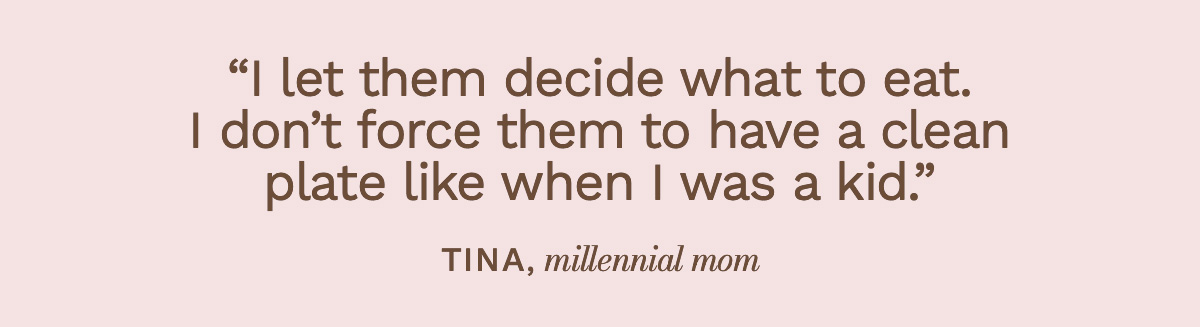
I also asked my auntie Nanette, a Baby Boomer, what her practice was before when her kids were young.

I appreciate both of these insights since I follow the best of both worlds. I hate food waste, but I also acknowledge that pressuring kids to continue eating even if they don’t want to anymore can do more harm than good.

I was also curious how playtime or entertainment with kids was in the past. For my auntie Nanette, it was as simple as pretend play with stuffed toys, doing word games, storytelling, and bedtime reading.
Another person I asked is my good friend slash wedding godmother, Carol. She has three kids, with her eldest being 15 and her youngest being nine. As a Gen Xer, she’d turn to educational electronic toys for her kids, but as they got older, she introduced them to board games like Scrabble and card games like Uno.
For Tina, she strikes a balance by using an iPad for playtime, but she also turns to Montessori toys and even playing hide and seek with them with a blanket.
It’s no surprise that nowadays there are a lot more interactive books and flashier toys, but it’s amazing to know that going back to basics is still fun for all generations.

I have fond memories of my mom being very creative when it came to reviewing for my tests. I remember that we would play a game where I’d start at the far end of the room and I would take a step forward for every correct answer. Back then, studying was just very simple and straightforward, where we just relied on my notes and my textbooks to get by.
My auntie Nanette also turned to simple tactics in developing her children’s study habits.
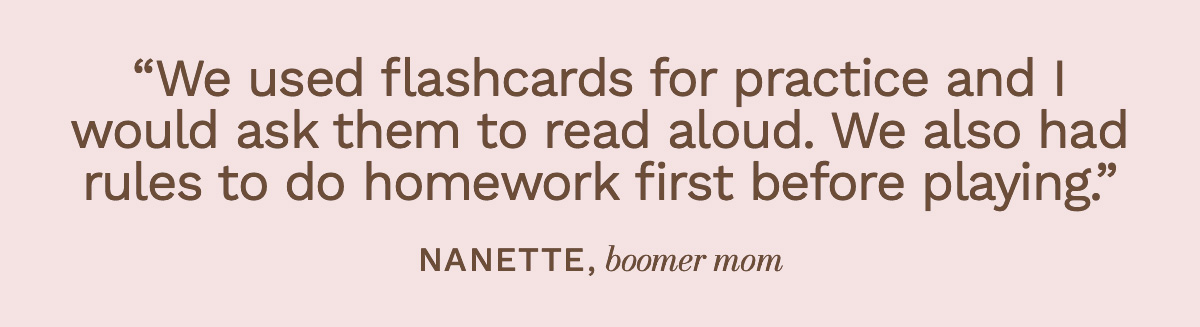
As for how to motivate them to have an appreciation for learning, she rewards them by eating out and of course by consistently giving praise.
Compared back then, setting up study habits nowadays can be more complex, what with the larger number of resources available. Since Tina’s kids are still too young and don’t go to a big school yet, I asked another millennial, my ate Anne, on how she approaches schooling with her 6-year old.
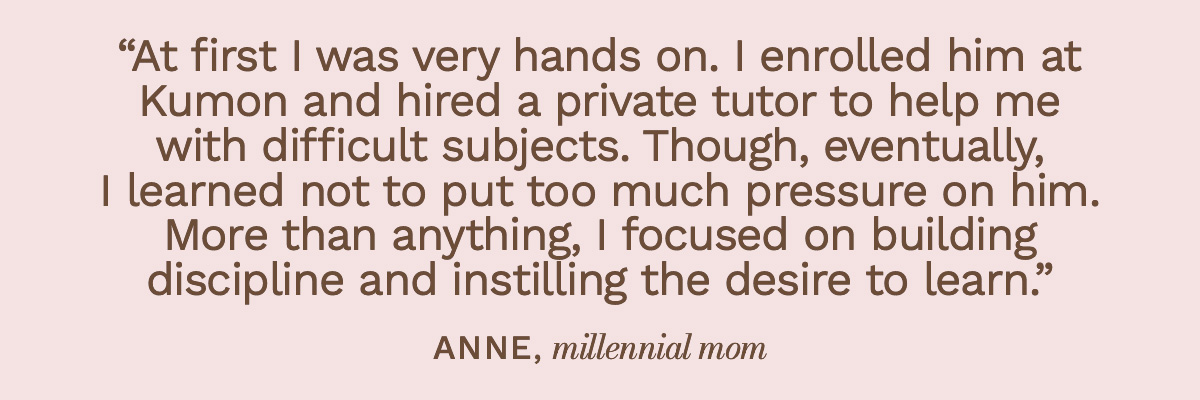
She eventually stopped Kumon and became more conscious instead of striking a balance between learning and play. However, she still swears by partnering with a private tutor and the availability of school activities online to help her efficiently integrate her work and parenting.
Similar to my auntie Nanette, though, ate Anne also believes in having a dedicated time for study and play, though she does acknowledge that playtime can also be a vehicle for learning other life skills. And of course, she also turns to rewards for her son to appreciate studying. “A simple sticker or a playdate at Kidzoona will do the trick,” she says.

When it comes to strictness, my auntie Nanette considers herself reasonably strict. She would resort to lecturing her kids or, if worse comes to worst, count to three before spanking them or putting them on time out.
For Carol, she doesn’t consider herself a strict parent and also admits that she sometimes forgets the rules.
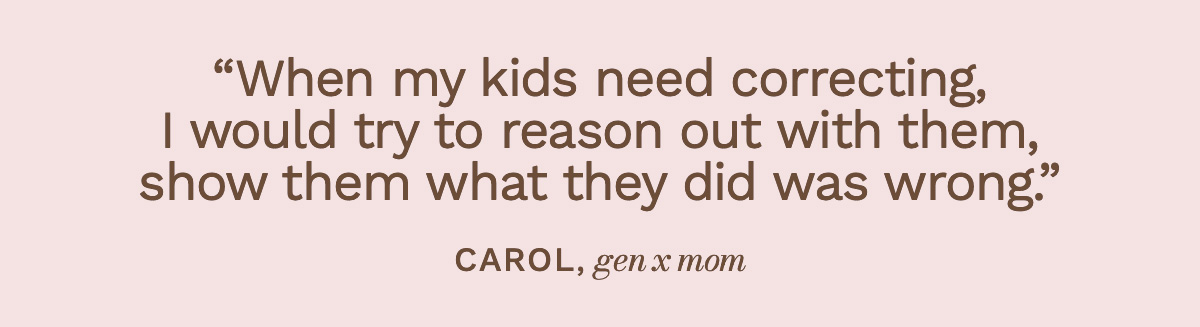
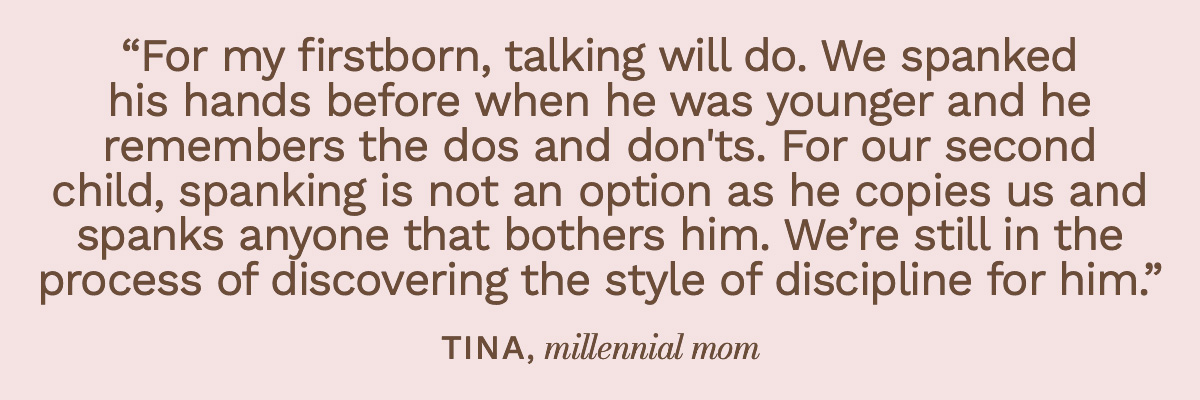
As for Tina, she considers herself as authoritative but gentle. Discipline varies for each of her kids, particularly for her eldest and middle child.
I think how each parent raises their kids can be a product of their upbringing and a product of their times. Most of my sources cited their parents and role models as a basis for their parenting styles, as well as their peers and the books and resources that were available as they were learning how to parent.
It’s beautiful to see how these practices can be passed down from generation to generation, albeit also making room for improvements based on our own intuitions as parents growing up alongside our children.
What generation do you belong to? Can you relate with the parenting practices mentioned here?