




Candy-filled buckets are all the rage among kids this season. For them, it all happens so fast: collecting candies, reciting or comparing sweets among friends, asking parents to take the candy wrappers off, and putting the candies in their mouths.
Sure, kids look cute enjoying all their treats, but not all are appropriate for them. One, kids can’t have too much sugar in a single day, and two, some are choking hazards and must therefore be avoided.
Moms and Dads, watch out for these choking hazards on your kids’ sweet treats!
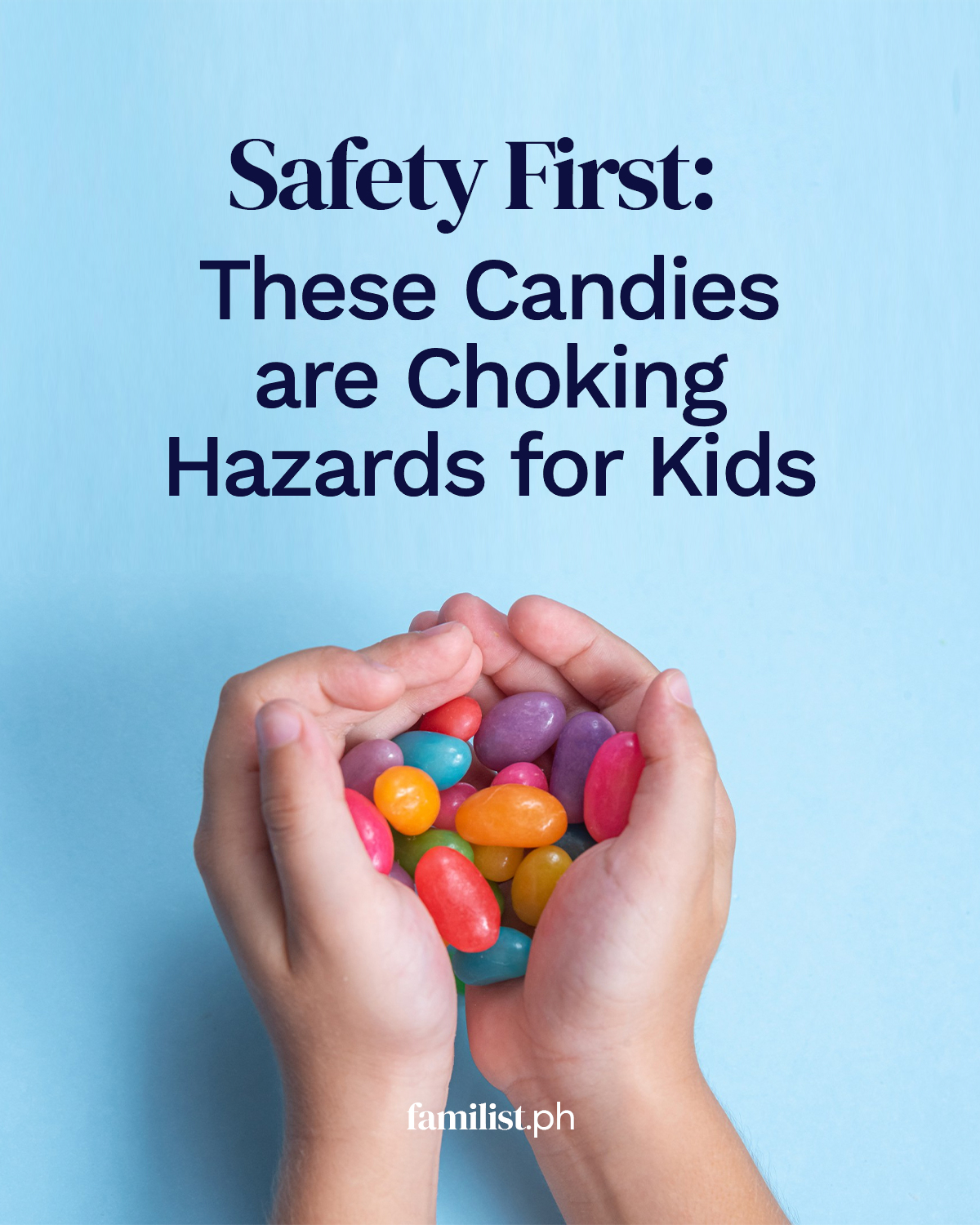
 The rule of thumb is this: every sweet or candy that cannot be dissolved or melted by your kids’ saliva in a short time is a choking hazard. This automatically means that hard candies such as gum balls, jaw breakers, round mints, gobstoppers, and lollipops are not safe for kids to consume.
Moreover, candies with hard ingredients such as peanuts, hazelnuts, and cashews, are choking hazards, too. Young kids have not developed their molars, or grinding teeth, yet, so there is no way kids can break the hard ones into smaller and safer-to-swallow pieces.
 Because of their size and shape, small, round candies can easily slide into a child’s throat, making it a serious choking hazard. This is why you must cut round but soft fruits in smaller portions before giving them to your children.
There are both sweet and sour round-shaped candies in the market which are very colorful and enticing to kids. Be wary of giving them!
 Some of these candies take the shape of a small characters which are cute to the eyes but cannot be easily chewed. Some of them are small enough to be swallowed and may cause blockage to the child’s airways.
Jelly beans, gummy bears and worms, sour tapes, chewing gum, marshmallows, and fruit candies are some examples from this category.
In this season when candies and sweets abound, here are some sweet reminders for you, Moms and Dads:
 Avoid forcibly taking away all the choking hazards from your kids. Remember that your kids have feelings, and a proper explanation is necessary. Go through the content of the bucket or goodie bag together, and let them know why they are not allowed to take some of them just yet.
 You can always give flatter, softer, and melt-in-your-mouth candies, or cookies and biscuits with the same characteristics.
 Kids below two years old are generally not recommended to eat sweet treats. Those below 3 or 4 are more at risk with choking incidents with candies. However, as parents, avoid the trap of saying, “My kids are five or six. They can already handle these candies.” Do note that it’s not just about the child’s age, but also about the child’s readiness and capability in dealing with the food served to them that they will be able to avoid choking.
 Yes, even when you think they are eating potentially harmless sweets.
 Taste and try the candies yourself, but if you’re unsure whether to offer them to your kid or not, just don’t. It’s always better to err on the side of caution.
These simple tips will keep your child safe, and will avoid unnecessary emergency on an otherwise happy and festive day. If you have more tips to share, do write them in the comments below!
Frequently Asked Questions (FAQs)
1. Why are some candies considered choking hazards for kids?
Candies that are hard, round, sticky, or chewy don’t break down easily and can block airways for young children who are still developing their chewing and swallowing skills.
2. At what age can kids safely eat candies?
Children below two years old should not be given candies. For kids aged three to four, sweets should still be limited to soft, melt-in-the-mouth types. Beyond age five, readiness still depends on the child’s chewing ability and awareness, not just their age. It’s important for parents to supervise them when eating.
3. What should parents do if their child starts choking on candy?
If your child starts coughing or struggling to breathe, stay calm and encourage them to cough forcefully. If they cannot breathe, cry, or talk, perform the back blows (depending on their age), and call for medical help immediately. It’s always helpful for parents to learn basic first aid and CPR.
4. How can I help my child understand why certain candies aren’t allowed?
Turn candy sorting into a bonding moment! Go through their Halloween or party loot together and explain which ones are “for bigger kids” because they’re harder to chew or swallow safely. This approach helps your child understand the “why” behind your rules and makes them feel respected, not deprived.
5. Are there safer candy options for young children?
Yes! You can offer softer, flatter, or melt-in-your-mouth sweets instead. Think of small cookies, soft wafers, marshmallow treats (in small, supervised portions), or soft chocolates that dissolve easily. Even with these, remind your child to sit down and eat slowly. It’s best for them to avoid running, talking, or laughing while chewing.
6. What are some healthier or non-food alternatives for trick-or-treating?
You can make trick or treating just as magical without relying only on sweets! You may try giving out stickers, mini stamps, coloring pads, activity books, puzzles, collectible toys, or DIY coupons for them to enjoy!
Sources:
- Choking Hazard for Babies
- Jelisa Castrodale, These Are the Halloween Candies That Are Not Suitable for Kids Under 5, October 2023
- Robin Hilmantel, These are the choking hazards hiding in your child’s Halloween bag, October 2023